
WooCommerce loyalty plugin vs hosted app: which should your shop use?
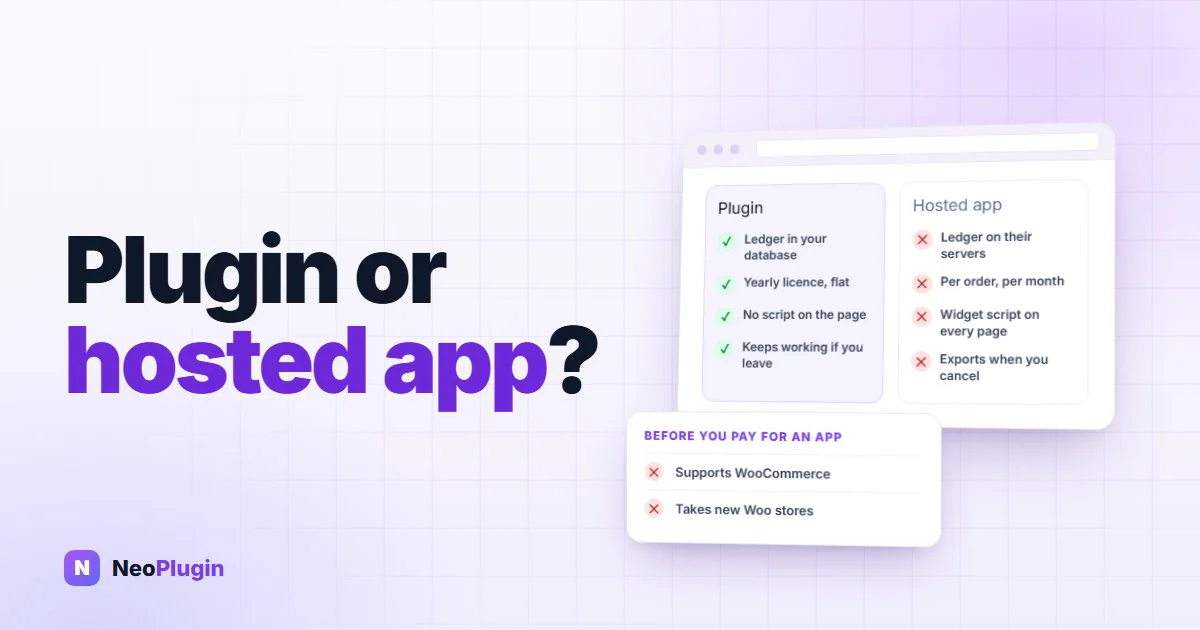
You have decided to start rewarding repeat customers. Good — it is one of the few things that reliably grows a shop without spending more on ads.
Now you have to pick something to run it with, and there are broadly two kinds of thing on offer.
One is a hosted app: you sign up to a company, pay every month, and they run your loyalty program on their computers. A small badge appears in the corner of your shop.
The other is a self-hosted WooCommerce loyalty plugin: you install it into your own shop, and it runs there, like every other plugin you already have.
This post is about how to choose between the two. It is not a subtle decision, and the first reason is one almost nobody mentions.
The short version
- The best-known hosted loyalty platforms do not run on WooCommerce. Smile.io and LoyaltyLion are built for Shopify, and Yotpo's support documentation says it takes no new WooCommerce accounts.
- Hosted pricing is metered by order count, so the same software costs more every time you have a good month — on one published price list, $79 a month at 1,000 orders and $999 at 7,500.
- A hosted app cannot change your checkout, so spending points ends in a coupon code to copy and paste. A plugin inside the shop takes the discount off the subtotal where the customer already is.
- Every balance a hosted app shows is a request to somebody else's server, with the page-speed risk that carries. A plugin reads it out of the database your orders are already in.
- The ledger stays yours. Stop paying a hosted vendor and the point history, tiers and expiry dates sit on their server. With a plugin the data is in your database whether you keep the plugin or not.
First, check it works on WooCommerce at all
The big loyalty companies you will find at the top of Google are, for the most part, not built for WooCommerce. They are built for Shopify.
This is not a criticism of them. It is just a fact worth knowing before you spend an afternoon reading their pricing pages.
| Loyalty platform | Does it support WooCommerce? | What they say |
|---|---|---|
| Smile.io | No | Supported platforms are Shopify, Shopify Plus, Shopify POS and BigCommerce. Their help center states plainly that Smile does not integrate with WordPress. |
| LoyaltyLion | No | Their own site says LoyaltyLion is "built exclusively for Shopify". |
| Yotpo Loyalty | Not for new shops | Their support documentation says Yotpo "does not currently support new WooCommerce accounts due to technical limitations that have led to unstable performance and a poor customer experience". |
That last one deserves a second read, because Yotpo still runs marketing pages aimed at WooCommerce owners. The sales side of the site invites you in; the support side says new WooCommerce shops are not taken on, and explains why.
So a large part of the "just use a hosted loyalty app" advice you will read online is written for a different shop platform than the one you are running.
What you are actually choosing between
Set the brand names aside. Underneath, you are choosing where your customers' points are kept.
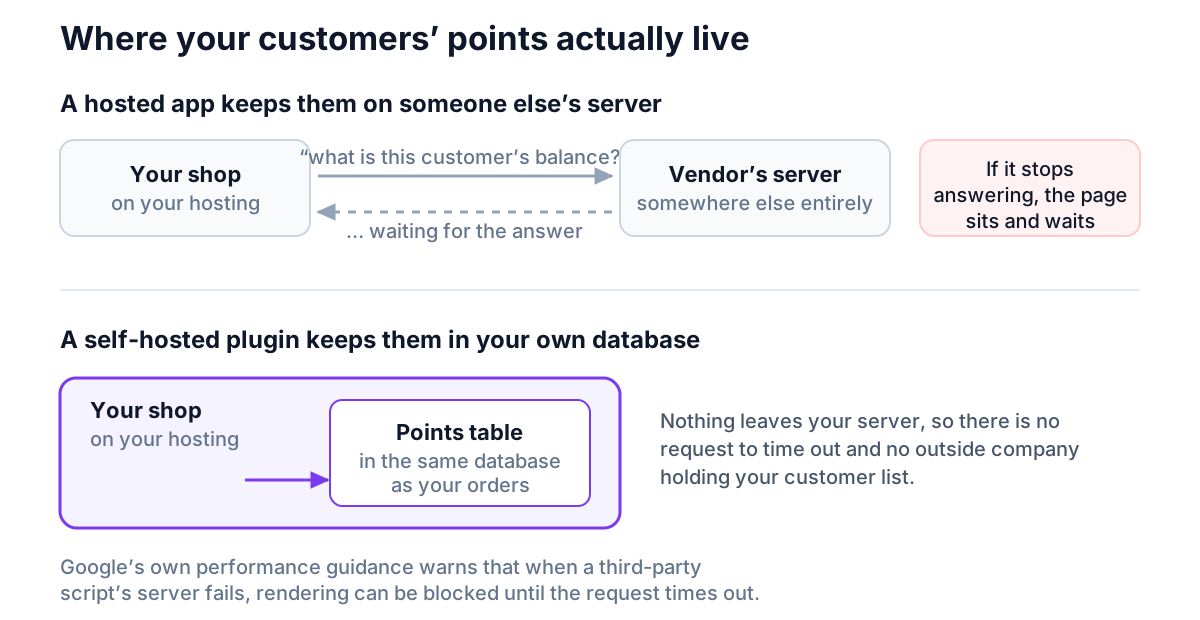
With a hosted app, the points live on the company's server. Your shop has to ask them, over the internet, every time it wants to show somebody a balance.
With a plugin, the points live in your own database — the same one already holding your orders and your customers. Your shop looks them up on the spot.
Most of the differences below come straight out of that one distinction.
Hosted app pricing goes up as your shop grows
Hosted apps charge by how many orders you take. That sounds fair until you realize what it means: the better your shop does, the more you pay for the same software.
Here is a real published price list rather than a hypothetical one.
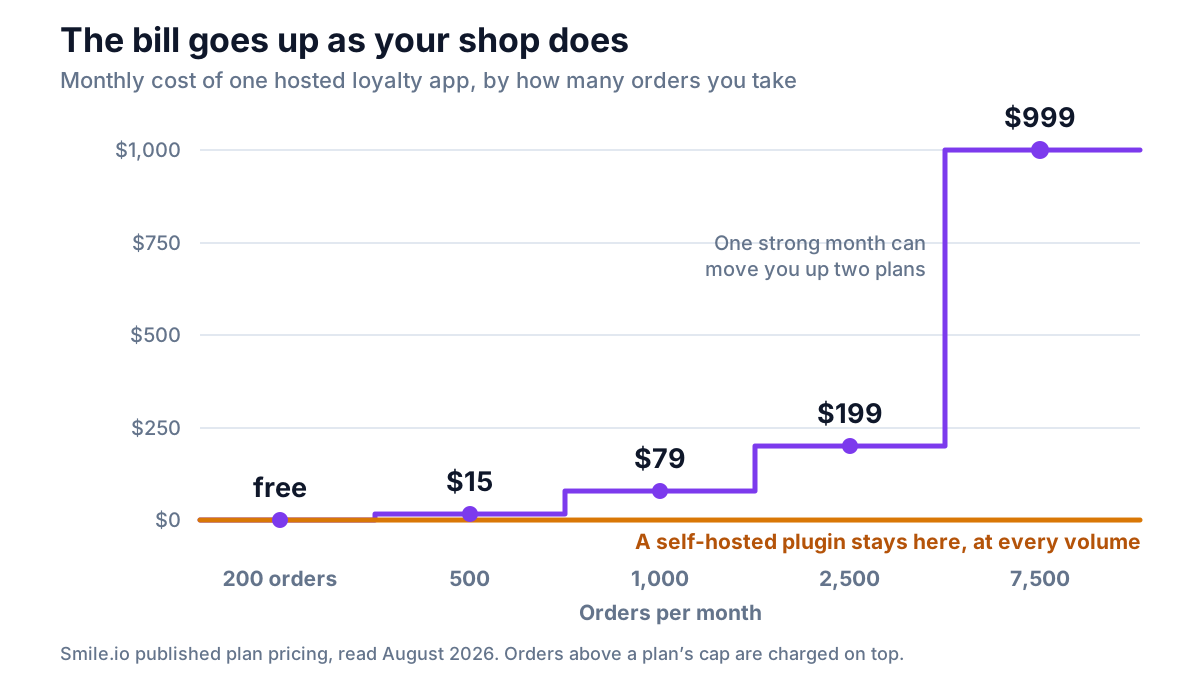
| Orders per month | Plan | Cost |
|---|---|---|
| Up to 200 | Free | $0 |
| Up to 500 | Essential | $15 / month |
| Up to 1,000 | Standard | $79 / month |
| Up to 2,500 | Growth | $199 / month |
| Up to 7,500 | Plus | $999 / month |
Smile.io's published pricing, read in August 2026. Go over your plan's order limit and the extra orders are charged on top.
Read that as a shop owner rather than as a table. A good Christmas, one product going unexpectedly well, a mention somewhere useful — and you move up a plan. Nothing about the software changed. You just sold more, which was the entire point.
There is a second thing hiding in those plans. Features are held back on the cheaper ones: on that price list, VIP tiers do not appear until the Standard plan, and access to the data through an API is reserved for the $999 plan and above.
A self-hosted plugin has nothing to meter. It runs on hardware you are already paying for, so a hundred orders and a hundred thousand orders cost the same. NeoGrow's free version has no order cap at all.
Spending the points has to be easy, or nobody bothers
This is the part shop owners underestimate, and it decides whether a loyalty program earns anything.
A points balance only makes you money when somebody comes back and spends it. McKinsey's loyalty research found that members who actually redeem their points spend around 25% more than members who signed up and never did — and that programs quietly relying on unspent points are counting a lost opportunity as a saving.
So the question is not "do I have a loyalty program", it is "how hard is it to use one".
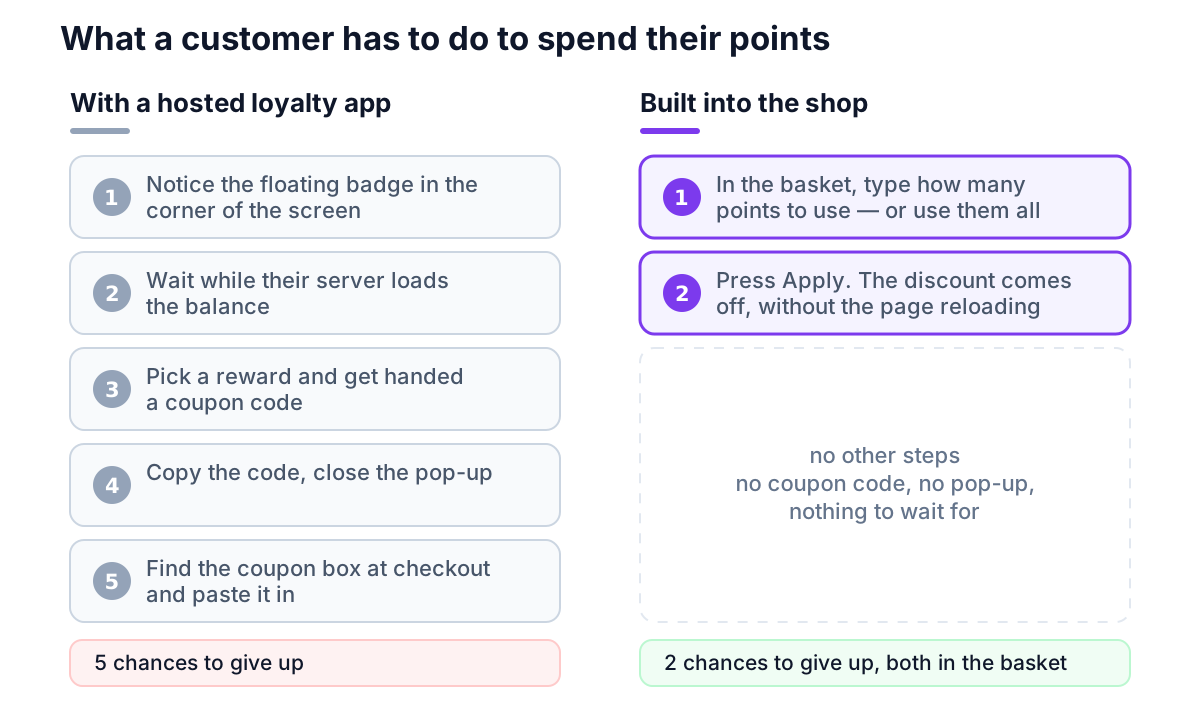
The hosted version usually ends with a coupon code. That is the giveaway. The app cannot change your checkout, so it hands the customer a code and asks them to apply it themselves. Every one of those steps is somewhere a shopper closes the tab.
A plugin that lives inside the shop does not need a code, because it can change the total directly. In NeoGrow the panel sits in the basket and at checkout: it shows the customer how many points they have, and a box where they type how many they want to spend — all of them, or a few. They press Apply, the discount comes off the subtotal, and the totals update without the page reloading.
Two steps, both in the same place, and nothing to copy. Letting them spend a part of their balance matters more than it sounds: a customer who only wants to knock a few pounds off today keeps the rest, which is a reason to come back again.
Four more things worth knowing: speed, lock-in, platform risk and privacy
Your shop waits for their server
When a page on your shop has to load something from another company's server, your page is only as fast as their server that day. Google's own performance guidance is blunt about the failure case: when a third-party script's server fails, rendering is blocked until the request times out — which, it notes, can be anywhere from 10 to 80 seconds.
That is the extreme case. The everyday one is quieter: a floating loyalty widget is a script fetched from another company's domain, so the browser pays for a fresh DNS lookup and connection before a line of it runs, then main-thread time while it draws itself over your page. Those costs land squarely on the numbers Google grades your shop by — a widget that appears late pushes out Largest Contentful Paint, and the work it does when somebody taps it lands in Interaction to Next Paint. Neither of those appears on the vendor's invoice.
Your customer will not know whose fault that was. They will just remember that your shop was slow.
If you stop paying, it goes
A loyalty program takes a year or two to be worth anything. When it is hosted, the balances sit on their server. Stop paying and you are negotiating to get your own customer list back in a spreadsheet — and point history, tier progress and expiry dates are usually the parts that do not travel well.
With a plugin, the data is in your database whether you keep the plugin or not.
Platforms do get dropped
This is not hypothetical. Smile.io stopped integrating with Wix in February 2025. Shops on Wix that had built up a loyalty program woke up to find their platform was no longer supported.
That decision is always available to a hosted vendor, and it is never available to you. A plugin on your own server keeps working whether or not the company that wrote it is still interested.
Somebody else is holding your customer data
Sending your customers' names, emails and buying history to a third party makes that company part of your data-protection obligations. It is manageable — plenty of shops do it — but it is a real responsibility, and it is one you simply do not take on if the data never leaves your own server.
The honest case for a hosted app
It would be unfair to pretend there is none.
If you are running on Shopify, the big platforms are genuinely mature and the choice is much closer. If you want a heavily gamified program with tiers, badges and a polished referral system today, hosted apps are further along than most WooCommerce plugins. And if you would rather somebody else be responsible when something breaks, paying monthly buys you that.
The point of this post is narrower: if you are on WooCommerce, most of those platforms are not an option anyway, and the ones that are will charge you more as you grow.
Hosted loyalty app vs WooCommerce plugin, side by side
| Hosted loyalty app | Self-hosted plugin | |
|---|---|---|
| Where the points live | Their server | Your database |
| What it costs as you grow | Goes up with your order count | Stays the same |
| Spending points | Usually a coupon code to copy | Applied at checkout directly |
| If their servers are slow | Your shop waits | Nothing to wait for |
| If you stop paying | You negotiate to get your data out | You already have it |
| If they drop WooCommerce | Your program ends | Nothing happens |
| Works on WooCommerce | Often not | That is the whole point |
Where NeoGrow fits
NeoGrow is the free WooCommerce loyalty plugin we build, so treat this paragraph accordingly.
It runs entirely inside your WooCommerce shop. Points are worked out on your own server and stored in your own database next to your orders. Redemption happens in the basket and at checkout — the customer enters how many points to spend and presses Apply, and the discount comes off the subtotal — rather than being handed a coupon code to paste in somewhere else. There is no order cap, no per-customer pricing and no account with us — the free version is genuinely free and unlimited, and there is nothing to disconnect if you decide to stop using it.
It also collects photo reviews and pays points for them, which is the other half of the same job — reviews win the first order, points win the next one.
What it does not currently have: VIP tiers, a referral system, or a visual rule builder. If those are must-haves today, it is not the right tool yet, and we would rather say so than have you find out after installing it.
Frequently asked questions
Do the big loyalty apps work with WooCommerce?
Mostly not. Smile.io supports Shopify, Shopify Plus, Shopify POS and BigCommerce, and its help center states it does not integrate with WordPress. LoyaltyLion describes itself as built exclusively for Shopify. Yotpo's support documentation says it does not currently accept new WooCommerce accounts, citing unstable performance. If you run WooCommerce, a plugin that installs into your own shop is usually the practical choice rather than a philosophical one.
Is a self-hosted loyalty plugin cheaper than a hosted app?
Almost always, and the gap widens as you grow. Hosted apps price by monthly order volume, so the same software costs more as your shop does better. On one published price list, 1,000 orders a month costs 79 dollars and 7,500 orders a month costs 999 dollars. A plugin runs on hosting you already pay for, so its cost does not move with your order count. NeoGrow's free version has no order limit.
What actually happens to my points data if I stop paying a hosted app?
The balances sit in the vendor's database, so getting them back means requesting an export and hoping it is complete. Point history, tier progress and expiry dates are the parts that most often do not come out cleanly. With a self-hosted plugin the data is already in your own database, so stopping the plugin does not remove it.
Will a loyalty app slow my shop down?
It can. A hosted app loads code from another company's server, so your pages depend on how that server is performing. Google's performance guidance notes that when a third-party script's server fails, page rendering can be blocked until the request times out. A plugin that reads points from your own database makes no outside request at all.
Why does spending points usually involve a coupon code?
Because a hosted app cannot change your checkout directly. It sits outside your shop, so the way it gives a discount is to generate a code and ask the customer to apply it. A plugin running inside WooCommerce can adjust the order total itself, so the customer stays in the basket: they type how many points to spend, press Apply, and the discount comes off the subtotal without a code and without the page reloading.
Can a hosted loyalty vendor stop supporting my platform?
Yes, and it happens. Smile.io ended its Wix integration in February 2025. Any hosted vendor can make that decision about any platform at any time, and shops on that platform lose their program. Software installed on your own server keeps running regardless of what the developer decides to do next.
So which should your shop use?
If you are on Shopify, shop around properly — you have real choices.
If you are on WooCommerce, the decision is mostly made for you. The best-known hosted platforms either do not support your shop or have stopped taking new stores like yours. What is left is software that installs into WooCommerce and runs there — which, conveniently, is also the version that does not get more expensive every time you have a good month.
If you want a shortcut through the shortlist, judge a candidate on two things before anything else: whether points come off the total in the basket without a coupon code, and what happens to the balances if you uninstall it. Those two answers separate the options faster than any feature table. If you would rather test a shortlist than read one, there are nine tests you can run on your own store — and our full WooCommerce loyalty program guide covers the design decisions underneath them. The same question this post asks of hosted apps — what happens if you stop paying — is asked of self-hosted plugins in nine questions before you buy a rewards plugin.
NeoGrow is a free WooCommerce plugin for loyalty points and photo reviews. It runs on your own shop, with no order limits and no monthly fee.